

A technology decision can make strategic sense and still fail to earn the confidence of the people accountable for it. Security leaders may see an opportunity to strengthen control. Finance may see migration costs. A board may see the exposure that comes with departing from an established choice.
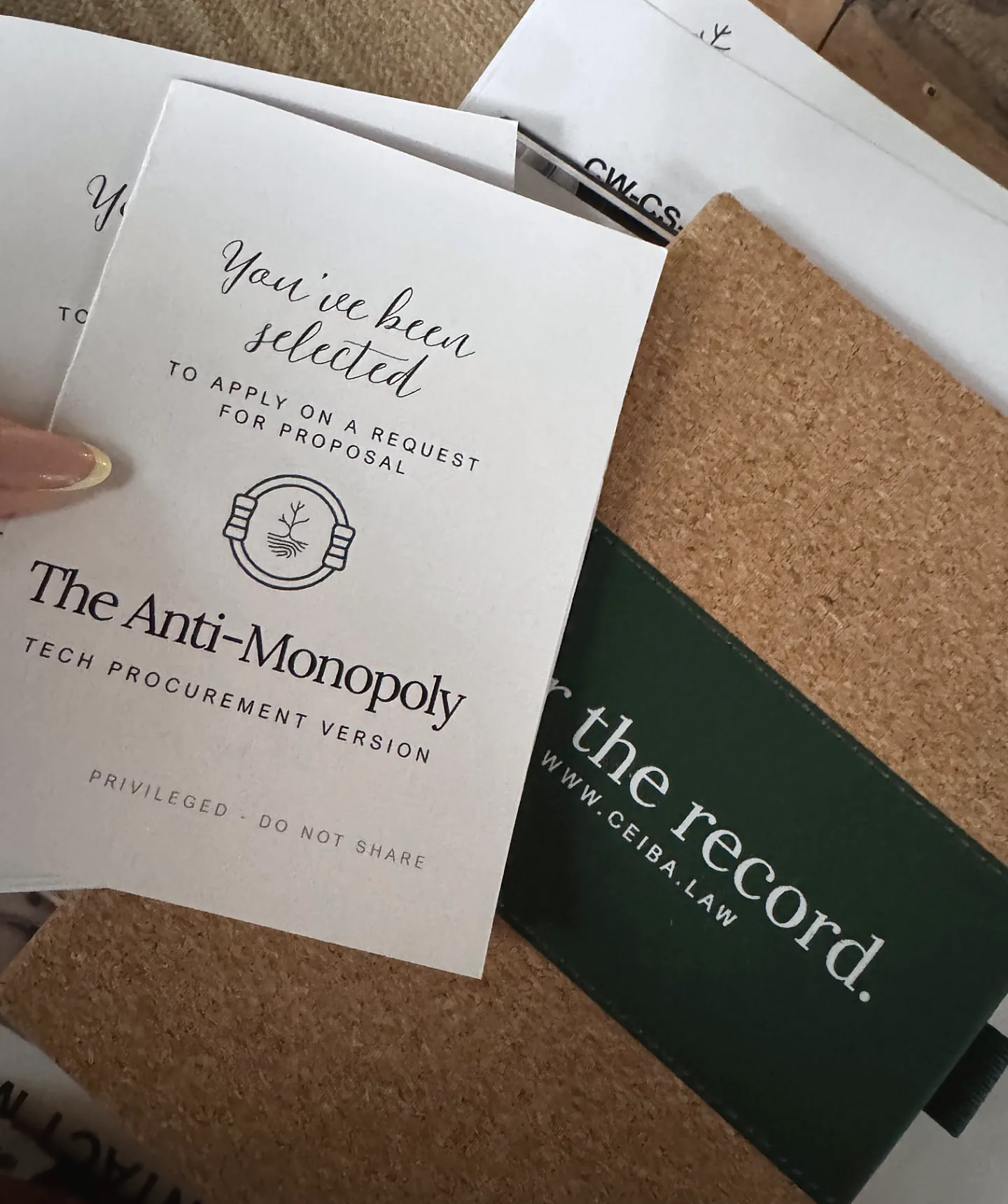
At Ceiba’s five-day leadership event for women in cybersecurity and technology, we explored these tensions through an applied decision-making seminar. The final workshop, The Anti-Monopoly, placed participants inside a fictional cloud procurement negotiation, where they had to defend a decision from the perspective of a specific role.
Micrologic supported the event as a partner. Its Cirrus sovereign cloud provided the case-study reference for an exercise that brought questions of digital sovereignty, commercial viability and executive accountability into the same conversation.
What emerged was a practical lesson in leadership: a compelling vision earns attention, but a defensible decision requires evidence.
1. A shared vision opens the conversation
Participants took on roles representing a local cloud provider, the board of an international organization operating outside Canada, and the Government of Quebec. Other participants represented privacy regulators and consumer protection agencies.
Each role brought a different responsibility to the table. Supporting a local technology ecosystem might align with a participant’s personal convictions, but her assigned role required her to examine the proposal through the interests she was responsible for protecting.
That distinction shaped the negotiations. Participants acting for the public sector saw value in local hosting, jurisdictional control and the ability to engage a provider within their regulatory environment. Those representing the private organization pressed harder on economic justification: what would change, what would it cost, and why would the organization be better off?
The exercise showed why a single persuasive narrative rarely serves every stakeholder. A CISO, CFO and board member may support the same ambition while requiring different evidence before committing to it.
For leaders proposing a change, the work begins with understanding those responsibilities. Enthusiasm becomes more useful when it is connected to the decision each person must defend.


2. The familiar choice has an advantage
One of the most revealing tensions concerned accountability. Continuing with an established provider could feel easier to defend than choosing an alternative, even when there were reasons to reconsider the incumbent.
The familiar choice carries a history of approval. A new choice requires someone to explain the departure.
For women leading cybersecurity and technology decisions, this is a recognizable challenge: identifying a sound alternative is only part of the work. You also need to make the reasoning visible to colleagues who carry different risks.
In the simulation, participants wanted proof-of-concept work, demonstrations and references from other clients. These gave them a way to evaluate change progressively rather than accept an entire proposition on trust.
The implication extends beyond procurement. When you ask an organization to change direction, build a route for testing the proposal. Define what must be demonstrated, who will assess it and what evidence would justify moving forward.
That process makes the decision easier to examine, challenge and explain.
3. Security needs evidence, and trust needs practice
Participants were not prepared to relax their security expectations simply because they supported the provider’s vision. They wanted the provider to anticipate concerns and demonstrate its capabilities proactively.
Meaningful audit rights mattered to both public- and private-sector roles. Participants wanted enough access and transparency to conduct substantive due diligence.
Contractual safeguards were important, but they did not resolve every concern. A contractual remedy addresses what happens when obligations are not met. Participants also wanted to understand how the working relationship would help prevent problems and manage them when they occurred.
Their requests included joint business continuity and incident response exercises, clear escalation paths, ongoing communication and shared governance processes.
These expectations made partnership concrete. Who would be available during an incident? How would the organizations coordinate? Could their teams rehearse a response together before a disruption?
For cybersecurity leaders, those questions connect procurement to operational resilience. They also create an opportunity for providers able to offer close collaboration: demonstrate how that proximity improves the customer’s ability to operate, respond and recover.
4. Executive clarity requires technical substance
One participant, playing a finance executive, pictured migration as unplugging one environment before connecting another. That assumption made the proposed change appear especially dangerous.
The discussion surfaced an opportunity to explain how a migration could be staged, including the possibility of running environments in parallel before a cutover. The appropriate approach would depend on the systems and workloads involved, but making the process understandable changed the conversation.
This was a significant lesson in executive communication. Less technical decision-makers did not need a more aspirational pitch. They needed a clearer account of how the proposal would work.
A proof of concept could make the proposition tangible. A migration plan could expose dependencies. An explanation of testing, sequencing and contingency arrangements could give colleagues something specific to assess.
For a CISO or technology leader, translating technical detail is part of building a decision. The aim is to give each stakeholder enough understanding to ask useful questions and take responsibility for the outcome.
Before strengthening a presentation, it is worth asking what the audience currently believes will happen. An unspoken assumption may be driving more resistance than the proposal itself.
5. Proximity becomes valuable when it changes the relationship
Participants saw potential value in local expertise, but wanted to understand how it would benefit their organizations in practice.
Those representing the public sector valued accessible technical support, including the possibility of on-site assistance. The international organization’s representatives saw value in bilingual or multilingual resources. Across the negotiations, participants sought flexibility in pricing, contract duration and commercial terms.
The broader expectation was that a closer provider relationship should allow more meaningful collaboration: direct communication, shared processes and a working model adapted to the customer’s needs.
This is where Micrologic’s support gave the workshop a useful foundation. Cirrus brought a concrete Canadian sovereign cloud offering into a discussion that could otherwise have remained abstract. Participants could examine how the promise of proximity and control might translate into the evidence, support and commercial relationship a buyer would seek.
These were fictional negotiations, rather than an assessment of Micrologic’s services or a record of actual customer agreements. Their value lay in the questions they surfaced, and in the opportunity to explore them from several executive perspectives.
What leaders can take back to work
The Anti-Monopoly gave participants a chance to practise a demanding part of executive leadership: supporting an ambition while testing the conditions that would make it responsible to pursue.
Before your next major technology decision, ask:
- What evidence does each accountable stakeholder need?
- Which assumptions about implementation remain untested?
- What can be demonstrated before a full commitment?
- How will the provider relationship work during a disruption?
This is the kind of work Ceiba creates space for: focused discussion, competing responsibilities and practical reflection with peers who understand the stakes.
We thank Micrologic for supporting the event and contributing a relevant case-study foundation for that work.
Explore The Ceiba Protocol, our leadership program for women in cybersecurity and technology. To build a decision-making seminar around your team’s own challenges, explore Ceiba’s corporate off-sites.
This is one session within The Ceiba Protocol.